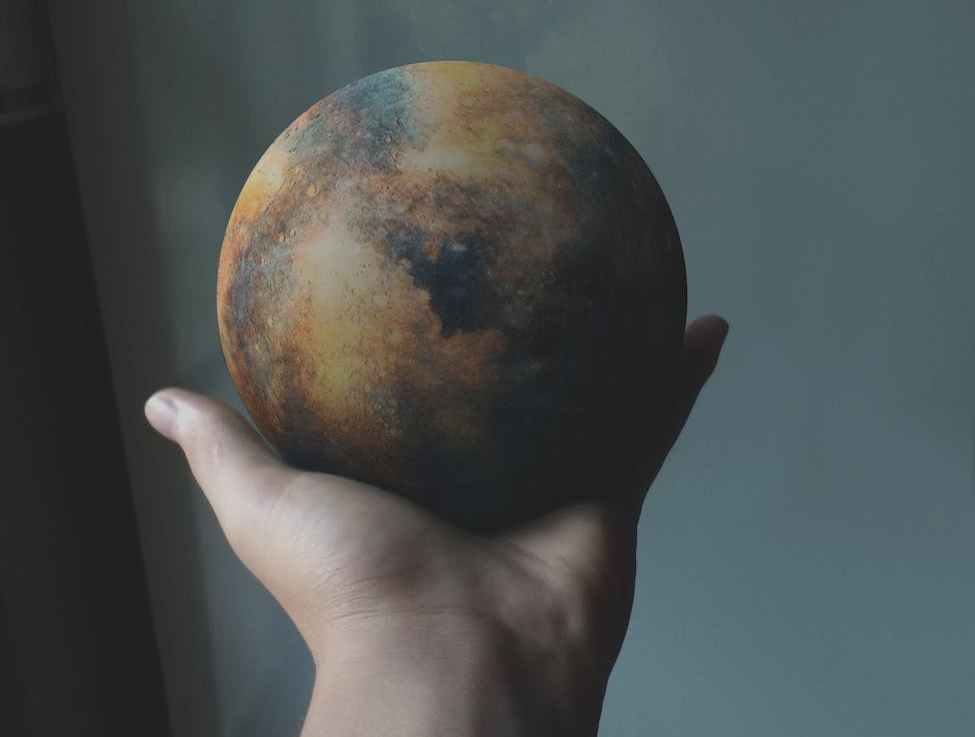
Research Question
How do the gravitational field strengths vary on different planets, what factors affect them, and how can we calculate the weight of an object on different planets?
Background: Gravitational field strength is the force experienced by a mass due to the gravity of another object. It is determined by the mass and distance between the two objects. The strength of the gravitational field on different planets is affected by several factors, including the mass and radius of the planet, and the distance from the planet’s center. Understanding the gravitational field strengths on different planets is important for space exploration and understanding the universe.
Hypothesis: The gravitational field strength on a planet is directly proportional to its mass and inversely proportional to the square of the distance from the planet’s center. The weight of an object on a planet is determined by the gravitational field strength and the mass of the object.
Methodology:
- Research the mass, radius, and distance from the sun of at least three planets in our solar system.
- Calculate the gravitational field strength for each planet using the formula:
g = (G x M) / r2
where g is the gravitational field strength, G is the gravitational constant (6.6743 ×10⁻¹¹ m3kg-1s-2), M is the mass of the planet, and r is the distance from the planet’s center.
- Analyse the data and graph the relationship between gravitational field strength, mass, and distance from the planet’s center.
Table 1: Gravitational Field Strengths on Different Planets
| Planet | Mass (kg) | Radius (m) | Distance from Sun (m) | Gravitational Field Strength (N/kg) |
| Earth | 5.97 x1024 | 6.38 x10⁶ | 1.50 x10¹¹ | 9.81 |
- Calculate the weight of an object on each planet using the formula: weight = mass x gravitational field strength.
Table 2: Weight Calculations for an apple with a Mass of 100g on Different Planets
| Planet | Gravitational Field Strength (N/kg) | Weight of Apple (N) |
| Earth | 9.81 | 0.98 |
| |
- Discuss the results and any limitations or sources of error in the study.
Expected Results: The results of the study are expected to show that the gravitational field strength on different planets varies depending on the planet’s mass and distance from its center. The data is also expected to support the hypothesis that gravitational field strength is directly proportional to the mass of the planet and inversely proportional to the square of the distance from the planet’s center. The study should also show that the weight of an object on a planet depends on both the mass of the object and the gravitational field strength of the planet.
Significance: Understanding the gravitational field strengths on different planets is important for space exploration, as it affects the ability of spacecraft to navigate and land on different planets. The study also has implications for understanding the formation and evolution of planets and the universe as a whole. The weight calculations on different planets are useful for designing and operating spacecraft, as well as for understanding the effects of gravity on living organisms in space.
Note
In Table 1, the mass, radius, and distance from the sun of three planets in our solar system are presented, along with their calculated gravitational field strengths. As expected, the gravitational field strength on Jupiter is much higher than on Earth or Mars due to its much larger mass.
In Table 2, the weight of an apple with a mass of 100g is calculated for each planet using the gravitational field strengths from Table 1. As expected, the weight of the apple is highest on Jupiter and lowest on Mars. The weight calculations in Table 2 assume that the apple is on the surface of each planet. In reality, the weight of the apple would vary depending on its altitude and distance from the planet’s center.
 Practical Science