
From an ancient planet that defies the laws of physics to bacteria engineered to hunt cancer, this week’s science news spans the cosmos and the deep blue sea. Here are six stories that caught our attention — and might just spark a great classroom discussion.
1. Webb Telescope Detects an “Impossible” Atmosphere on a Lava World
NASA’s James Webb Space Telescope has found the strongest evidence yet for a thick atmosphere on a rocky exoplanet — and it’s one of the last places scientists expected to find it. TOI-561 b is an ultra-hot super-Earth, roughly 1.4 times the size of our planet, that whips around its star every 11 hours at a distance forty times closer than Mercury is to the Sun. Its dayside is a permanent ocean of molten rock. Despite these brutal conditions, JWST’s near-infrared spectrograph detected a blanket of water vapour, oxygen, and carbon dioxide surrounding the planet. The dayside temperature came in at around 1,800°C — scorching, but far cooler than expected, suggesting the atmosphere is redistributing heat. Scientists describe it as a “wet lava ball,” and its existence challenges models about how rocky planets lose their atmospheres over time.
Think About It: Why might scientists have assumed this planet couldn’t hold on to an atmosphere? What factors cause a planet to lose its gases into space?
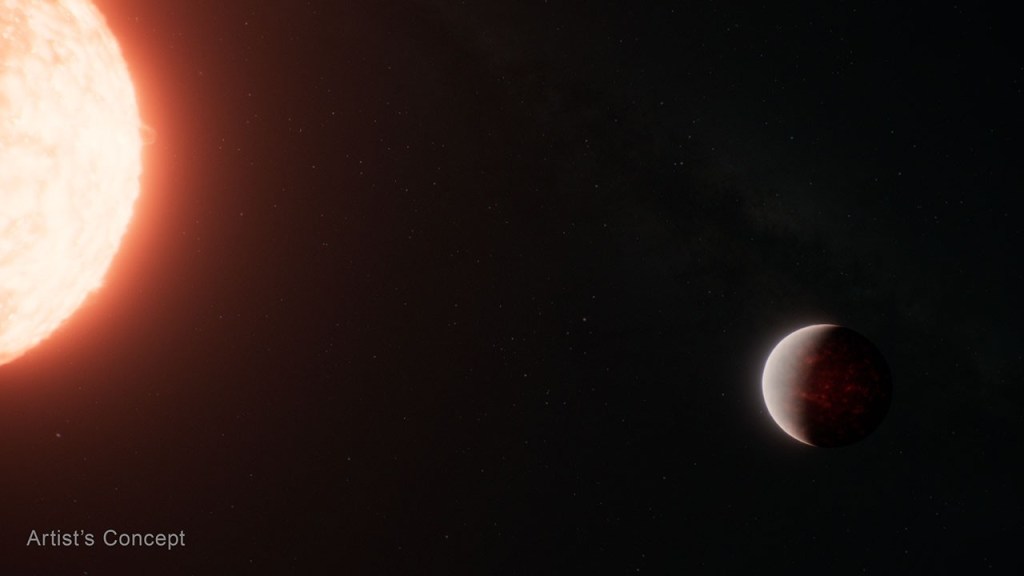
Image credit: NASA/JPL-Caltech — view source image
2. China Approves the World’s First Brain Chip for Paralysis
In a world first, China has approved a brain–computer interface (BCI) for commercial use in patients with spinal cord injuries. The device, called NEO, was developed by Neuracle Medical Technology in Shanghai and is a coin-sized implant embedded in the skull. Eight electrodes sit on the surface of the brain — without penetrating the tissue — and read electrical signals when the patient imagines moving their hand. Those signals are decoded by a computer and sent to a robotic glove, allowing the wearer to grasp objects and perform everyday tasks like eating and drinking. In clinical trials, one patient who used the device for nine months regained the ability to feed themselves. Remarkably, their untrained hand also showed improvement. The device is now available to patients aged 18–60 with neck-level spinal cord injuries, making it the first BCI approved for broad clinical use anywhere in the world.
Think About It: How does a brain–computer interface differ from traditional treatments for paralysis? What ethical questions might arise as this technology becomes more widely available?
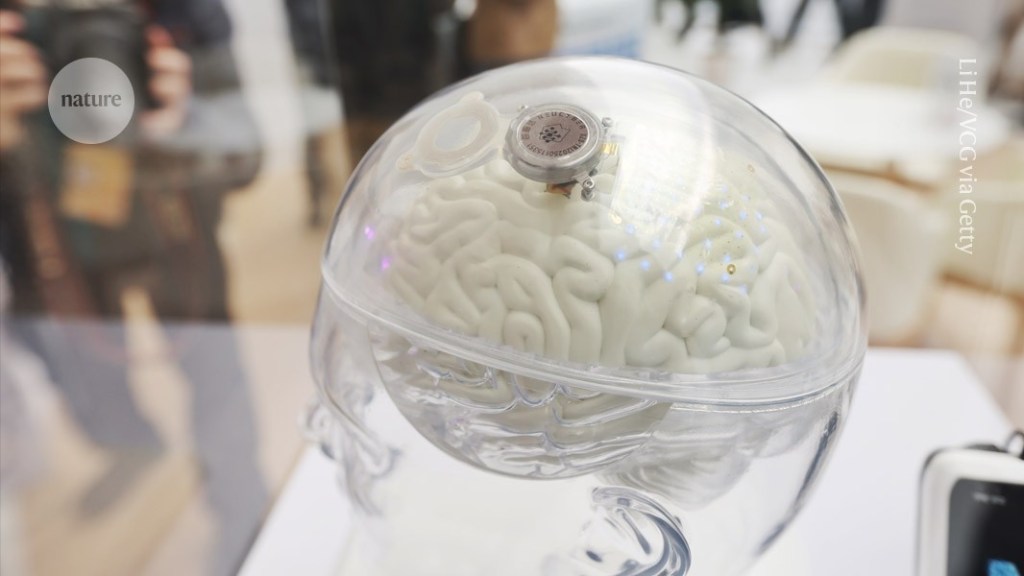
Image credit: Neuracle Medical Technology — view source image
3. Scientists Turn Probiotic Bacteria Into Tumour-Hunting Cancer Killers
Researchers at Shandong University in China have engineered a strain of the probiotic gut bacterium E. coli Nissle 1917 to produce an FDA-approved cancer drug called romidepsin directly inside tumours. When injected into mice with breast cancer, the modified bacteria navigated through the bloodstream, accumulated inside the tumours, and released the drug on site — effectively turning each bacterium into a tiny, targeted drug factory. The approach significantly slowed tumour growth while sparing healthy tissue, addressing one of the biggest challenges in cancer treatment: getting drugs to the right place without harming the rest of the body. The study, published in PLOS Biology, is still at the preclinical stage, so human trials are some way off. But the concept of using living organisms as programmable delivery vehicles could transform how we think about precision medicine.
Think About It: What advantages might bacteria have over traditional drug delivery methods when targeting tumours? Can you think of any risks involved in injecting engineered bacteria into a patient?
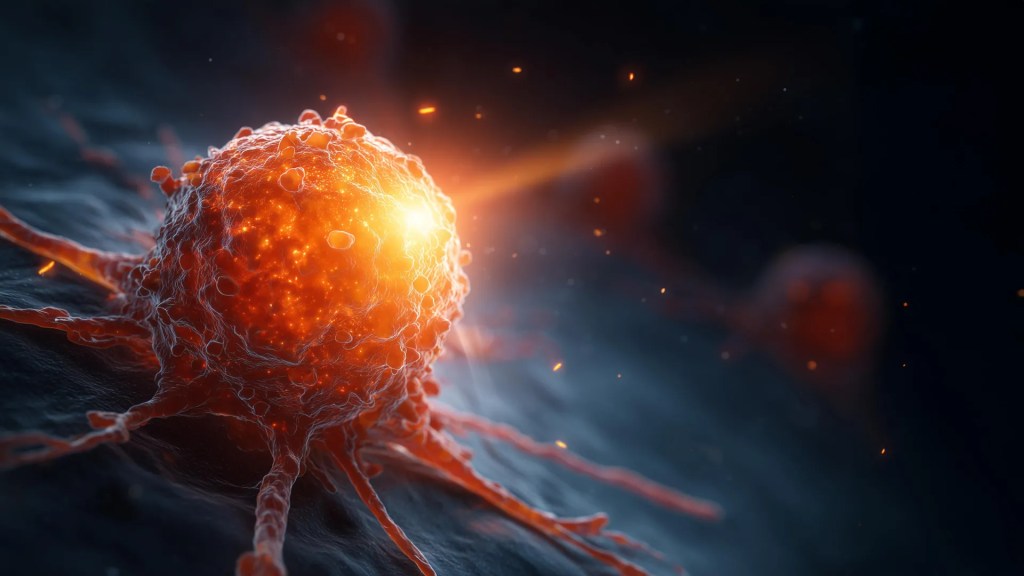
Image credit: PLOS Biology / Shandong University — view source image
4. Lab-Made Hexagonal Diamond Is Harder Than the Real Thing
For decades, scientists have debated whether lonsdaleite — a hexagonal form of diamond — truly exists as a distinct material. Now, a team of Chinese researchers has settled the argument by creating it in the lab. Starting with highly oriented pyrolytic graphite, they squeezed it between tungsten carbide anvils at 200,000 times atmospheric pressure and temperatures up to 1,900°C. The result was a millimetre-sized sample of pure hexagonal diamond, confirmed by X-ray diffraction and atomic-resolution electron microscopy. Most impressively, it tested slightly harder than natural cubic diamond, recording a hardness of 114 gigapascals compared to diamond’s typical 110 GPa. The study, published in Nature, was independently supported by two other groups who achieved similar results in 2025, making the finding highly reproducible. Potential applications range from cutting tools to quantum sensing — though scaling up production remains a challenge.
Think About It: Diamond and lonsdaleite are both made entirely of carbon atoms. How can the same element produce materials with different hardness? What role does atomic arrangement play?
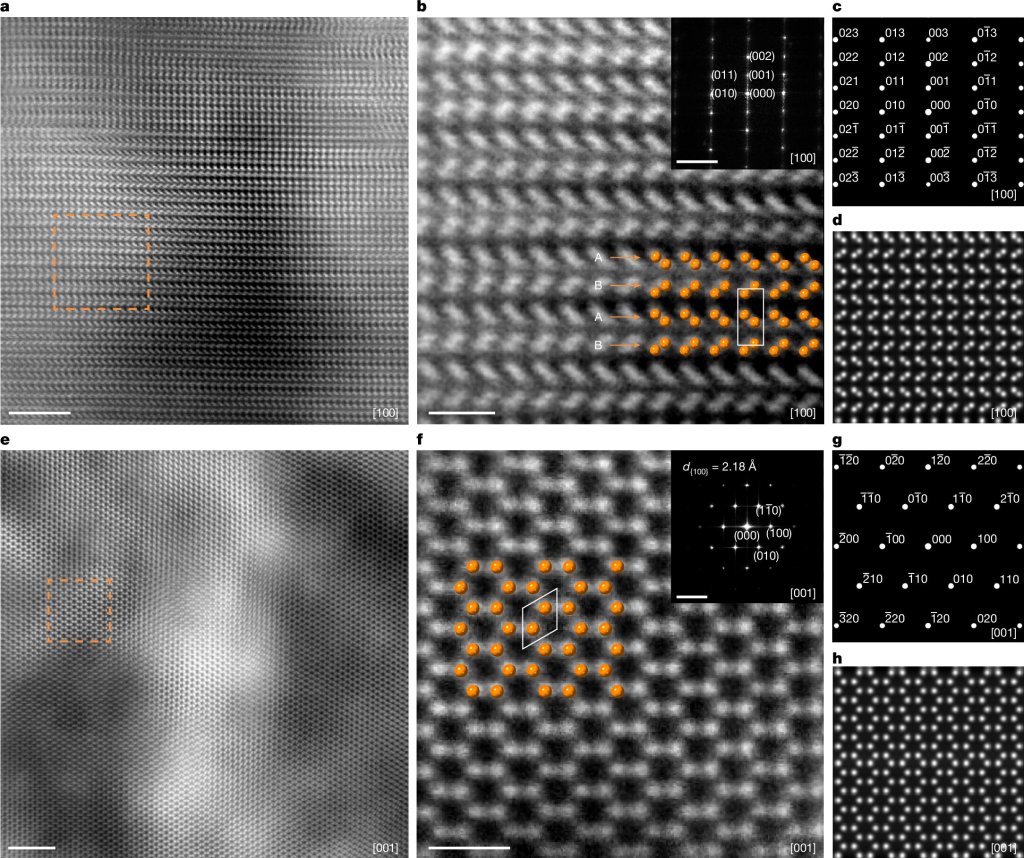
Image credit: Nature / Shandong University — view source image
5. “Super” El Niño Could Make 2027 the Hottest Year on Record
NOAA’s Climate Prediction Center has issued an El Niño Watch, reporting a 62% chance that El Niño conditions will develop between June and August 2026. If it forms, there is roughly a one-in-three chance it could become a “strong” event by late 2026 — and some forecasters warn of a potential “super” El Niño, defined by Pacific sea surface temperatures rising at least 2°C above the long-term average. Because El Niño’s warming effect on global temperatures typically peaks with a lag, climate scientists say 2027 could become the hottest year ever recorded. NOAA already estimates a greater than 90% chance that 2026 will rank among the five warmest years on record. With oceans already at historically high temperatures, the combination of background warming and a strong El Niño could push global heat into truly unprecedented territory, with cascading effects on weather patterns, agriculture, and ecosystems worldwide.
Think About It: Why does El Niño cause a lag in global temperature rise rather than an immediate effect? How might a “super” El Niño affect weather patterns where you live?

Image credit: NOAA — view source image
6. Bull Sharks Have Friends — and They Choose Them Carefully
Bull sharks have long been considered solitary, aggressive predators — but a six-year study in Fiji has revealed a surprisingly rich social life. Researchers from the University of Exeter tracked 184 bull sharks at the Shark Reef Marine Reserve and found that the animals don’t simply mix at random. Instead, they display “active social preferences,” choosing certain individuals to spend time with while avoiding others. Adults were the most socially connected, frequently forming bonds with sharks of similar size and engaging in coordinated behaviours like parallel swimming and lead-follow movements. “As humans, we cultivate a range of social relationships — from casual acquaintances to our best friends, but we also actively avoid certain people — and these bull sharks are doing similar things,” said lead author Natasha Marosi. The findings, published in Animal Behaviour, challenge popular perceptions and could change how we approach shark conservation.
Think About It: Why might social bonds be an advantage for bull sharks? How could understanding shark social behaviour help with conservation efforts?
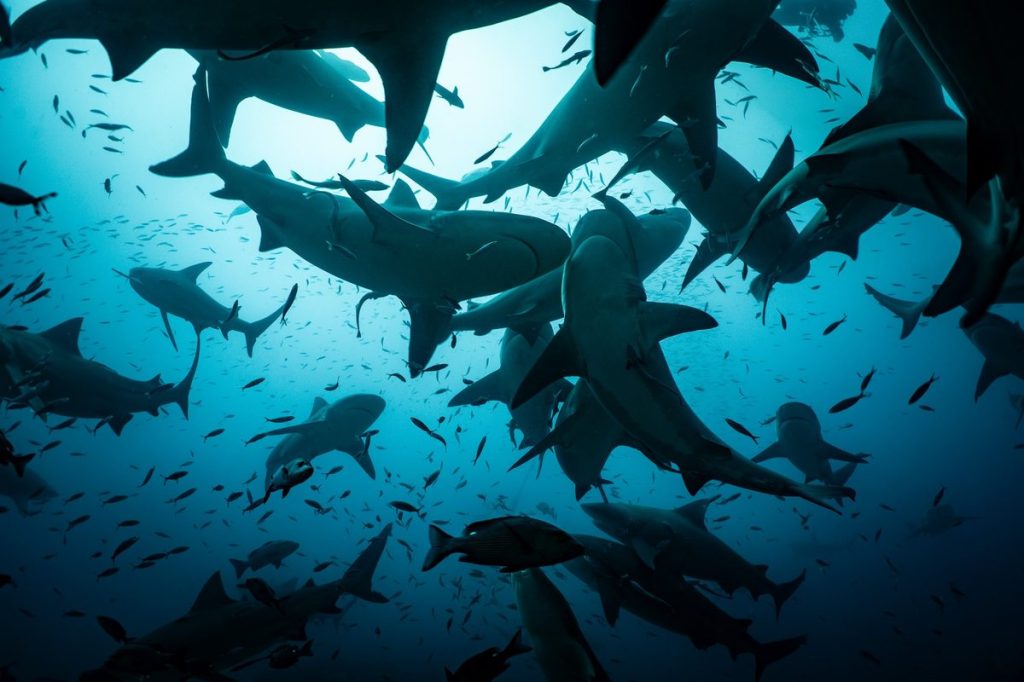
Image credit: Fiji Shark Lab / University of Exeter — view source image
That’s your science roundup for this week! Which story surprised you the most? Share your thoughts in the comments, and don’t forget to come back next week for another dose of the latest discoveries shaping our world.
 Practical Science